


TRACK EXPERIENCE
Introduction
From 2011 to 2018, the Clio RSR Project evolved through continuous use on Athens Circuit. Every session — from structured schools to open trackdays and HTTC events — revealed strengths, exposed weaknesses and guided the engineering direction of the car. The track became the most honest development tool: objective, repeatable and unforgiving.
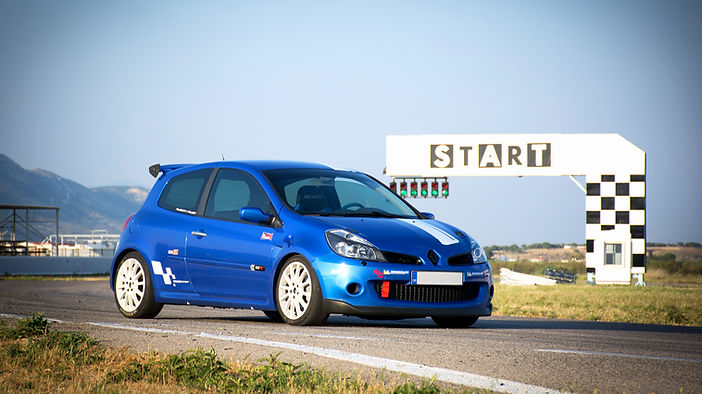
1. The Beginning (2011)
The story begins in 2011 with a structured driving school at Athens Circuit.
The car wasn’t factory — it already featured a balanced first‑stage setup that sharpened the chassis, improved braking consistency and made the platform more communicative, typical of early Clio RS builds — but it was still early in its evolution.
This first contact with the track defined the baseline and opened the door to everything that followed.
2. Early Years (2012–2014)
January 2012 — 1:14.92 (Road Tyres)
The first proper trackday.
Road tyres, ESP fully active, cautious driving.
A clean starting point.
February 2012 — 1:13.39 (Toyo R888)
The first major leap.
Semi‑slicks transformed grip, confidence and pace.
April 2012 — 1:12.43 (R888 + –2.5° Camber)
Geometry changes sharpened the front end and stabilised the car under load.
Incremental brake upgrades improved fade resistance, while small chassis refinements increased stability.
Weight reduction also began progressively, shaping the car’s evolving character.
March 2013 — 1:12.28 (LSD + Upgrades)
The Quaife LSD and drivetrain improvements unlocked traction and consistency.
March 2013 — 1:11.19 (Breakthrough Lap)
A defining moment.
Driver, setup and conditions aligned — the first “serious” lap.
October 2013 — 1:12.60 (Worn R888)
A relaxed, non‑competitive day. Not representative of performance.
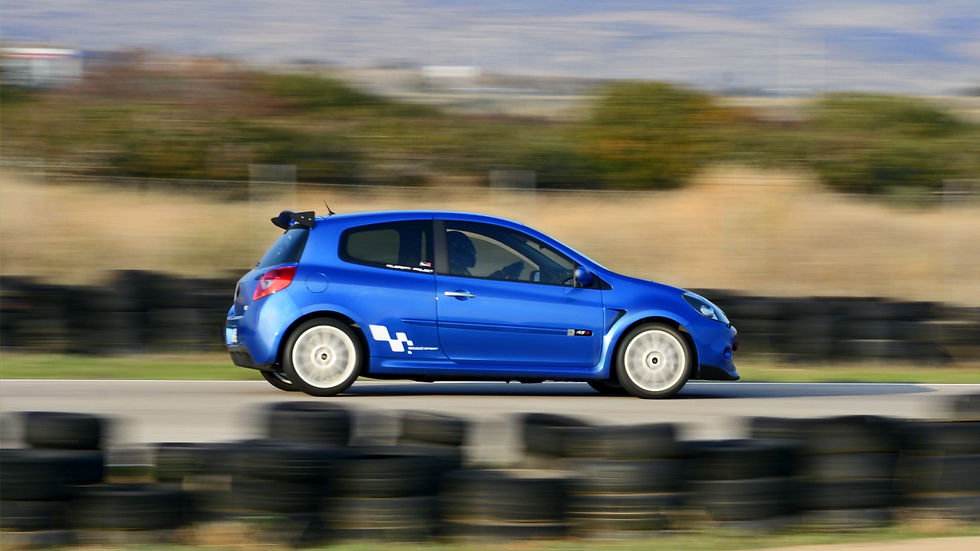
November 2014 — 1:09.40 (Michelin S9C Slicks)
The fastest lap ever recorded by the project.
Full slicks revealed the true potential of the chassis.
On that day everything worked perfectly — balance, grip, braking and consistency — and the car showed it could repeat these lap times all day long.


3. Late Trackdays & Transition Phase (2015–2018)
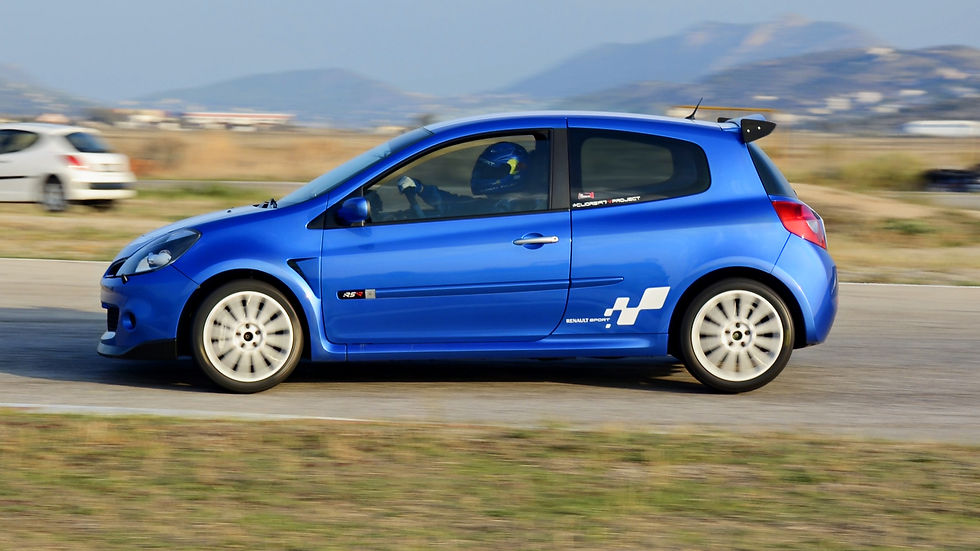
May 2015 — ~1:10–1:11 (Slicks)
Limited running, no clean laps.
April 2016 — 1:10.56 (Slicks — End of Life)
Worn slicks losing pressure.
Not representative.
November 2018 — Wet Warm‑Up (3 Laps)
Heavy rain, exploratory laps only.
A symbolic end to the trackday era.


4. Evolution Through Track Use
Every session revealed patterns, limitations and opportunities.
-
strong mechanical grip
-
predictable balance
-
brake fade under repeated use
-
tyre performance as the biggest factor
-
geometry as a transformative tool
-
LSD as essential
-
reliability upgrades as mandatory
-
the Clio platform rewards precision
5. Engineering Evolution
The project evolved through data, not guesswork.
5.1 Tyres
Road → R888 → Slicks. Each step delivered major gains.
5.2 Brakes
From early DS2500 pads and cooling improvements, the braking system evolved into a full motorsport‑grade setup with floating rotors and DS1.11 pads, delivering significantly higher thermal capacity, consistency and fade resistance.
5.3 Geometry & Chassis
Camber, Cup links, reinforced components and a wide‑track front end progressively sharpened the platform.
5.4 Drivetrain
Quaife LSD, shorter 3rd gear and lightweight flywheel improved traction, acceleration and repeatability.
5.5 Engine & Reliability
R3 oil pump, ACL bearings, ARP bolts, improved breathing and upgraded lubrication control with sump baffles ensured durability under sustained load.
Later, revised valve timing, improved flow and updated mapping elevated the powertrain to a higher stage than anything previously tested on track.
5.6 Suspension
The suspension evolved from custom Bilstein coilovers to full Renault Sport Cup geometry and ultimately to a bespoke Öhlins DFV/STX configuration — engineered specifically around the car’s wide‑track architecture.
5.7 The Final Package (2016)
By 2016 the car was a cohesive, track‑engineered machine.
5.8 The Unused Potential
Major upgrades after 2016 were never tested in a proper dry session with slicks.
The car today is significantly faster than any lap time it has ever recorded.
6. Lap Times Summary Table
Telemetry analysis - Fastest Lap: 1.09.40


RaceChrono telemetry from the 1:09.40 lap — speed trace, G‑forces, splits and Vmax/Vmin data

Optimal lap : 1.09.19
7. Transition to Clubsport
By 2016, trackdays became increasingly difficult to attend consistently.
The real limitation was time — the preparation required before each event, the mechanical checks afterwards, and the inevitable workshop hours needed to keep the car at peak condition.
Chasing marginal gains meant repeating the same cycle after every small issue, and the process no longer matched the available time.
The philosophy of the project began to shift.
The goal was no longer to optimise the car for three trackdays per year and then tolerate a compromised, tiring setup on the road.
The priority became clear: to enjoy the car everywhere — not only on track — without sacrificing its motorsport DNA.
Despite the shift in philosophy, the car never lost its sharp character.
Every upgrade was chosen to preserve precision, feedback and stability.
With a few clicks on the suspension, the car can still enter the track and deliver representative lap times without additional preparation — a true Clubsport machine that remains ready whenever the opportunity appears.
8. Today — The RSR Project as a Complete Machine
The Clio RSR Project today is lighter, sharper, more powerful, more stable and more refined than the specification that set 1:09.40.
-
wide‑track Cup geometry
-
330 mm floating rotors + DS1.11
-
custom Öhlins DFV/STX
-
revised engine breathing and timing
-
reduced weight
The current specification is capable of performance far beyond its recorded lap times — but has never been measured in a proper dry session.
A balanced, lightweight, communicative Clubsport machine: shaped by the track, perfected for the road, and ready for whatever comes next.